
Free 2026 Builder's Briefing • Greater Boston
The state's protection fund pays $25,000. Maximum.
You're planning to spend forty times that.
That gap isn't a scandal. It's arithmetic. And it means the builder you pick is the only real protection you have.
Here are the 7 questions that tell you whether they can carry it. In 20 minutes, you'll know what most homeowners find out eighteen months in.
- 4.8-Star Rated on Google
- 75+ Projects Across Greater Boston
- Serving Greater Boston Since 2015
Why the wrong builder is never obvious
The build was never the risk.
The risk is the conversation that happens before it.
You've met three builders. Maybe five.
Every one was likable. Every one had a portfolio, references, and a story about a difficult job they rescued. Nothing in that room told you who to trust with the house.
Because the questions that would have told you never got asked:
- Who specifically holds the license that legally supervises code work on your home, and what have they built?
- What happens to your money if a subcontractor you never hired doesn't get paid?
- What happens when a detail you care about turns out to cost more than planned, and nobody wants to have that conversation?
74% of homeowners end up with regrets about their renovation. Almost none of those regrets trace back to the construction.
This briefing is how you find out in the first conversation, not the eighteenth month.
The Builder's Briefing
Every question in this briefing comes from 75+ real design-build projects across Greater Boston.
Every legal citation is printed so you can verify it yourself. Chapter and section, Massachusetts General Laws.

What's inside
The questions that separate a builder who can carry a project this size from one who will learn on yours.
Download the Briefing →- 01
Where Massachusetts homeowner protection runs out, and the exact dollar figure that proves it. On a $2M project it works out to about 1%. Almost nobody is told this before they sign.
- 02
Licensed and registered are two different things. One requires passing a building-code exam. The other requires a form and a fee. How to find out in ten seconds which one is supervising your house.
- 03
How a subcontractor you never hired, and never met, can place a lien on your home after you've already paid your builder in full. The one document that stops it, and how to ask for it.
- 04
A fixed price, or an estimate that moves. The single question that reveals how much of the builder's risk you'd be absorbing instead of them. Most homeowners never think to ask it.
- 05
3 questions the money never asks. Whether the finished home will actually look like the one in your head, what "value engineering" usually means when nobody tells you it happened, and the ownership question to put to any builder before a seven-figure commitment. Including us.
One project file, opened
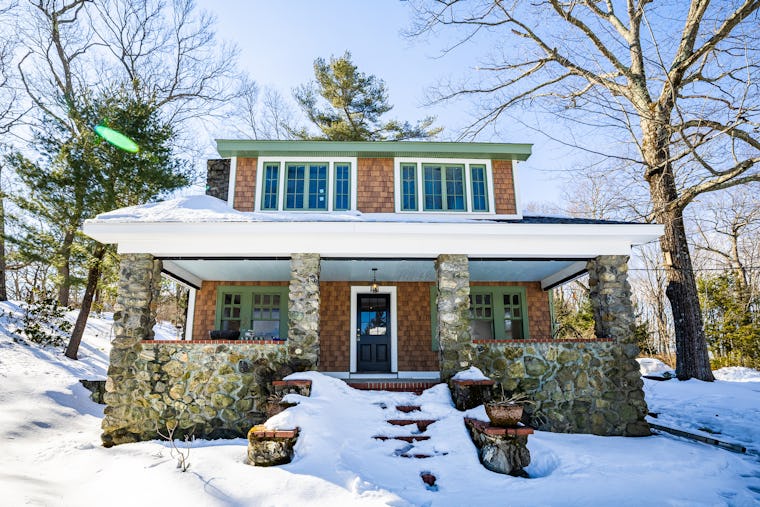
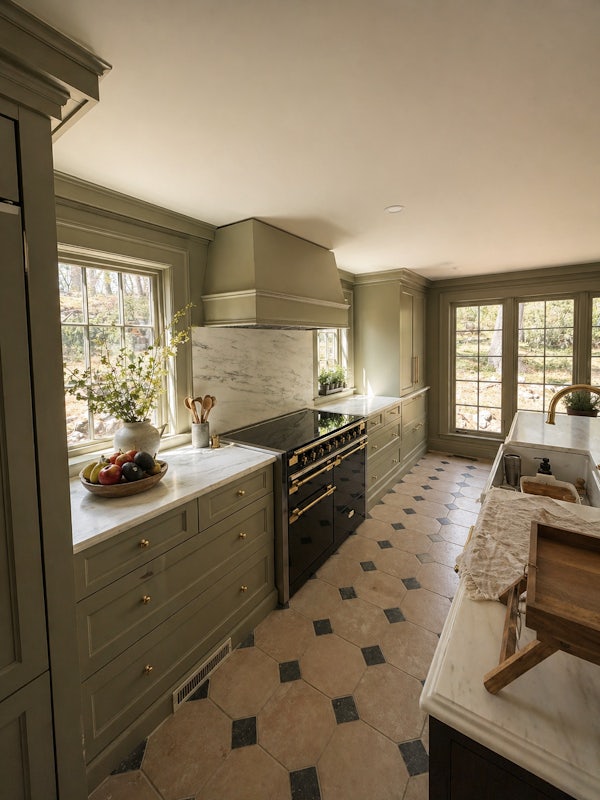
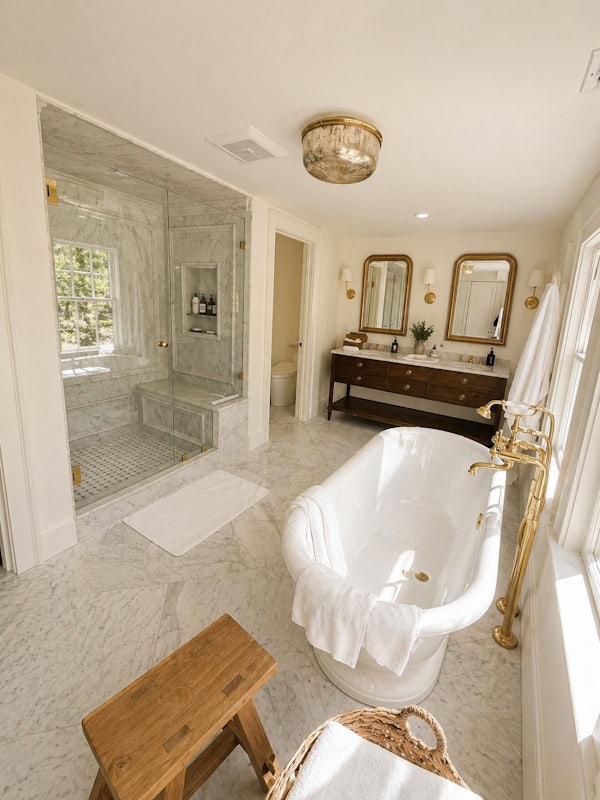
They signed at $2.4M. The final bill was $450 over.
"We'll never sell this house. This is the place where we'll grow our kids." The message we got from homeowners after the job was done.
A price is only as reliable as the planning behind it. That number held because the design was finished before it was quoted, not after.
The file above is the answer to question six. Here it is twice more.
Wellesley
Whole-home renovation
Signed $1.8M · Closed $1,200 under
2 change orders
Newton
Custom home
Signed $3.1M · Closed $2,800 over
4 change orders
Among renovations that run over budget, 78% of the overrun traces back to selections. Clever Real Estate, 2024. Decisions made after the contract was signed, on a project where the design was never finished first.
The same standard, every home
From a $500K renovation to a $3M custom build, every home here was priced after the design was complete.
That is the answer to question six. This is what it looks like when a builder can actually give it.

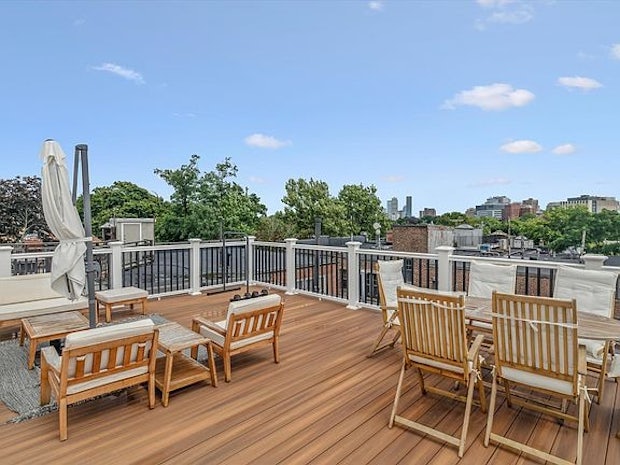

Brookline
A 1920 building, one full floor, plaster moldings buried under decades of quick updates. The goal: a penthouse that lives like a single-family home. Light moving east to west, original floors refinished instead of replaced, a roof deck opened to the skyline.
Old buildings hide things behind the plaster. Which is exactly why the number gets set after the design is finished, never before. The light study, the floor plan, the deck: all drawn, priced, and signed while the walls were still standing. Ask any builder how complete the design is before they commit to a price.
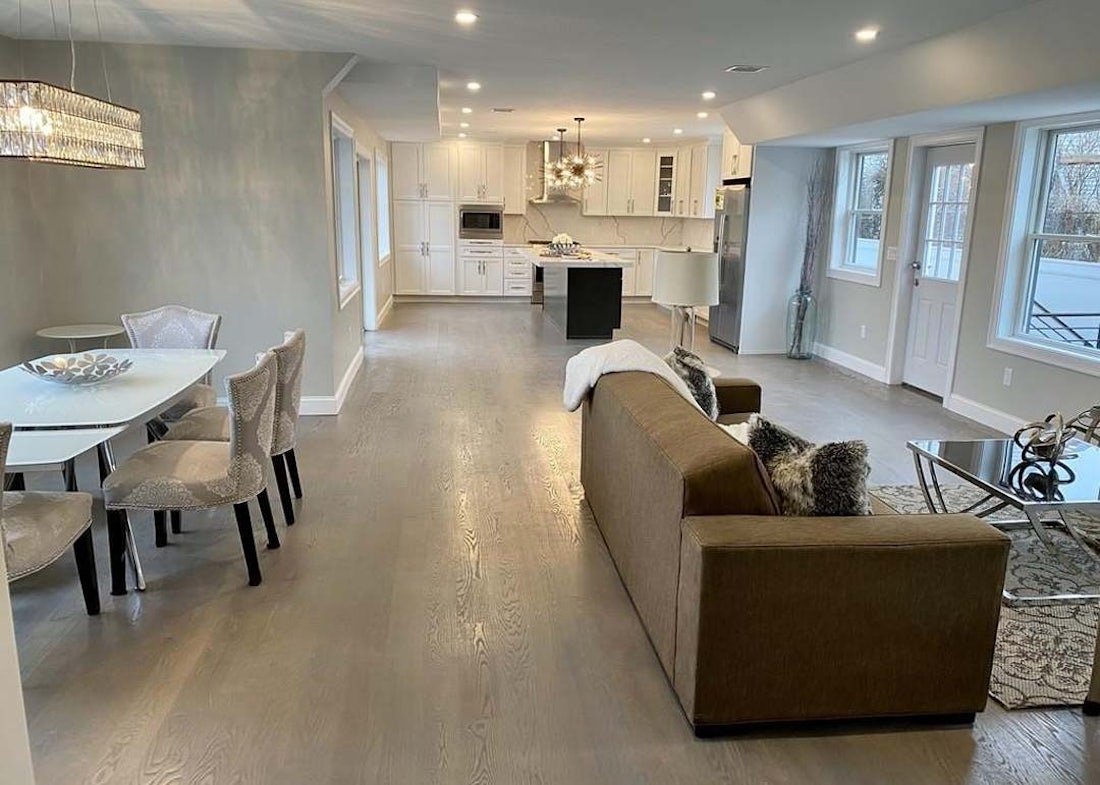
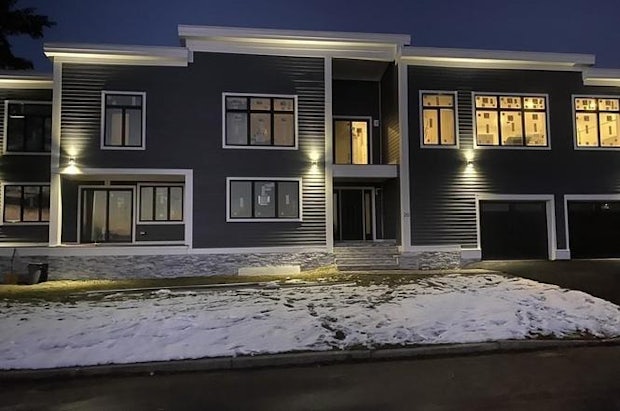
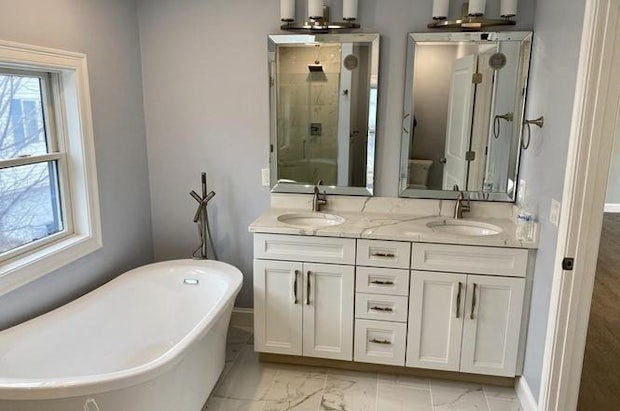
Winchester
Contemporary lines in a town that mostly builds colonials. One open run from dining through kitchen to living, windows on both exposures, a dark island anchoring the kitchen under sculptural pendants, a freestanding tub set where the morning light lands.
Modern rooms don't forgive the way colonials do. No trim to hide a seam, no crown to disguise a compromise. Every sightline and every fixture placement got drawn and priced at full scale before the first stud went up. Nothing the homeowners cared about got quietly simplified to make a number work.

Saugus
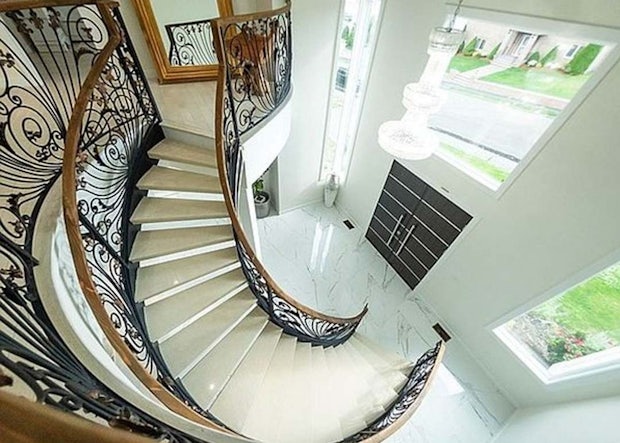
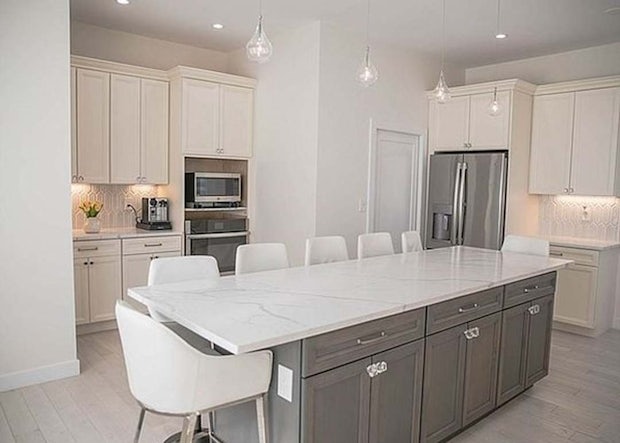
A colonial on a quiet Saugus street, the kind you'd drive past without a second look. Open the front door and a hand-forged, wrought-iron staircase curves through the center of the house, the kitchen and its twin ovens just beyond it.
Custom ironwork doesn't come from a catalog. Somebody draws the curve first, then prices every foot of railing to match it. That staircase, and the kitchen behind it, were drawn, quoted, and signed before the first weld. Nobody found out what that staircase cost after it was already standing in the stairwell. That's the whole point of asking early.
A word from the founder
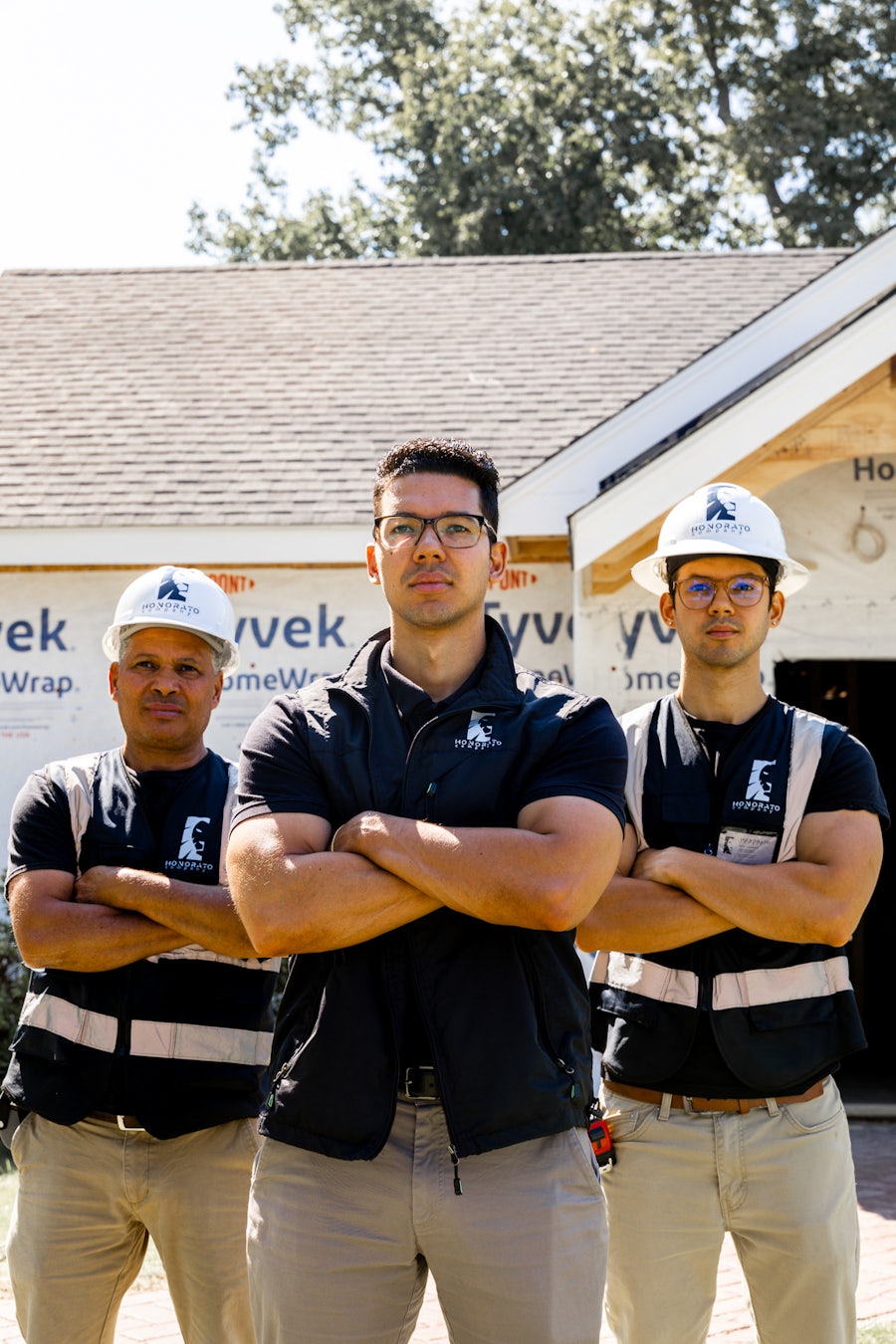
You've asked every builder the same questions.
You've gotten the same answers.
Everyone says they're honest. Everyone says they do quality work. After the fourth conversation they start to sound identical, and you're left choosing on instinct, on a portfolio, on who seemed most reassuring in your kitchen.
Years ago I started paying attention to where serious projects actually go wrong. Almost none of it traced back to construction. It traced back to the first meeting, when the questions that mattered never got asked. So I wrote them down.
If you've been careful about whom you trust, you're right to be. Use these questions on every builder you're considering. Including us. A builder who answers them directly is telling you something. So is one who doesn't.
Client story · In their words
"It showed me exactly what I wanted to see."
Maureen and Billy lost their Natick home to a fire. Before the rebuild began, they sat down with the plans, the selections, and every number, together, in one book. This is them at the end of their first pre-construction session.
Maureen & Billy · Whole-home rebuild · Natick · Filmed at close of their pre-construction session
Before & after
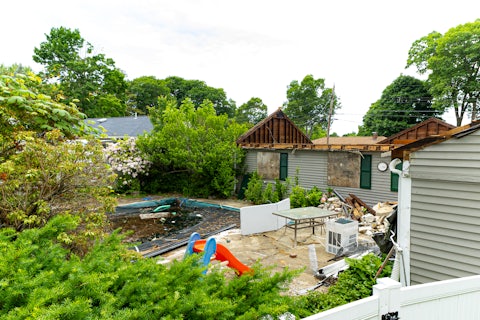
The plan they saw. The home we built.
Architects, engineers, designers, vendors, builders: one shared plan before the first board was cut. When Maureen and Billy walked through the finished home, nothing surprised them. That was the point.
Before


After
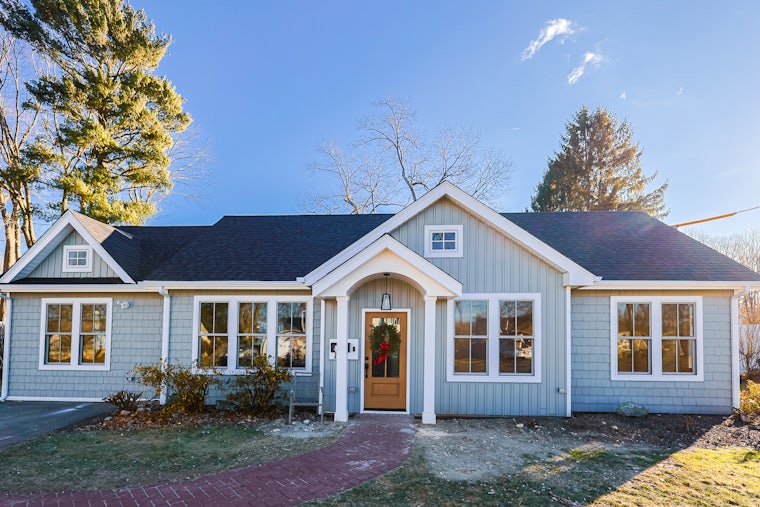
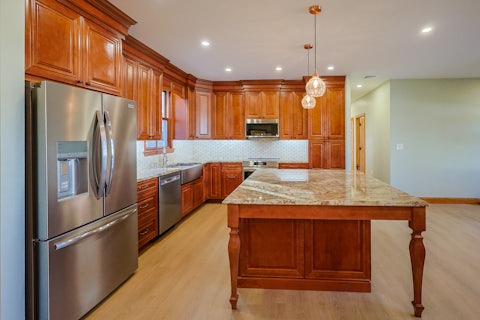
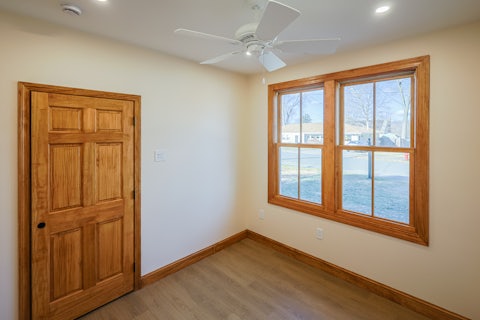
The home came back better than it left: energy systems the original never had, and a whole-home water filtration system the region's supply made worth adding. All of it decided, priced, and signed before the rebuild began.
What homeowners say
What it feels like when
the project is done right.
The most valuable part was feeling like I could dream big and not be punished for it. I had a partner who respected the vision and wanted it executed correctly, not rushed.
I expected more firefighting. Instead, it felt like issues were anticipated and handled before they reached me.
If you know exactly what you're getting, you want an easy plan and a team that leads, this is the way to do it.
Honest math
You're going to hand someone $500K–$3M either way.
The only question is whether you checked first.
These are the same questions we'd want asked of us, built on 75+ projects across Brookline, Newton, Lexington, Wellesley and Greater Boston.
Whether you hire us or not, you'll walk into your next builder meeting knowing more than most homeowners know after they've signed.